
 DNV GL/NIAHO Accredited facility.
Dallas and Richardson Hip Fracture Surgery Center
At Eminent Medical Center, we provide expert care for hip fractures, including femoral neck fractures, femoral head fractures, and intertrochanteric fractures. Most hip fractures occur in older patients due to osteoporotic bone and other medical conditions, but younger and active patients can also suffer a broken bone near the hip joint.
Our orthopedic surgeons offer personalized surgical treatment options, including internal fixation, partial hip replacement, and total hip replacement, each designed to restore mobility, protect blood flow to the femoral head, and prevent complications such as avascular necrosis.
If you or a loved one was recently treated in the emergency room for a hip fracture, trust our team to provide compassionate care and expert fracture surgery. Contact Eminent Medical Center at 469-910-8800 to learn more about our hip surgery options in Richardson and Dallas, Texas.
What Is a Hip Fracture?
A hip fracture is a serious injury involving a break in the upper part of the femur, or thigh bone, near the hip joint. Most hip fractures occur in the femoral neck or head, critical areas within the ball-and-socket joint that support the body’s weight and mobility. These fractures can also happen in the intertrochanteric or subtrochanteric regions, which involve the greater and lesser trochanters of the hip bone.
Hip fractures are especially common in older patients with osteoporotic bone, but they can also affect younger patients after high-impact trauma. Because the hip plays a major role in stability and movement, a broken bone in this area often results in intense pain, limited mobility, and the need for surgical treatment.
Complications such as blood clots, avascular necrosis, or blood loss may occur without proper care. Understanding where and how hip fractures occur helps determine the most effective treatment plan, whether that involves internal fixation or hip replacement.
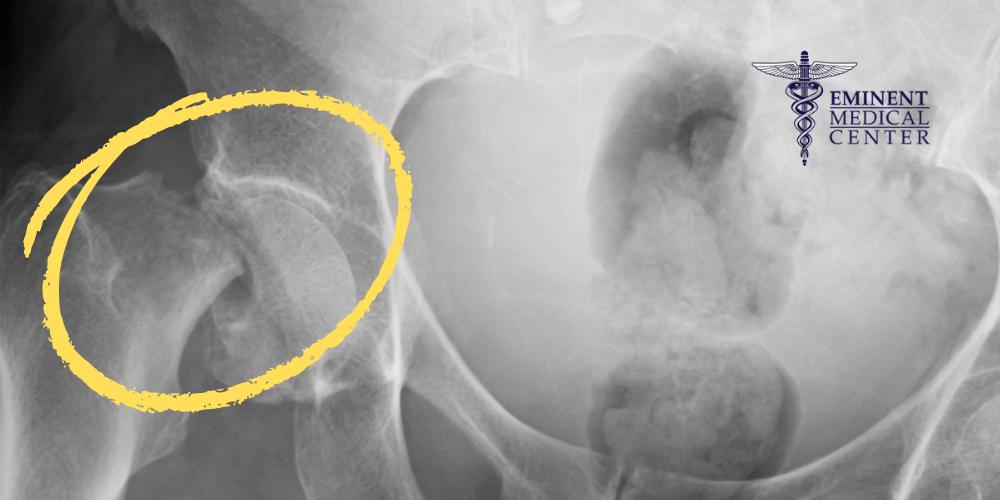

Types of Hip Fracture Surgery We Offer Richardson and Dallas, TX
At Eminent Medical Center, we offer a range of advanced surgical treatment options for hip fractures based on the location and severity of the injury. Our experienced orthopedic surgeons in Richardson and Dallas, TX, provide personalized care to treat displaced fractures, restore mobility, and preserve the blood supply to the hip joint.
Whether you’re dealing with femoral neck fractures, intertrochanteric fractures, or subtrochanteric fractures, our goal is to stabilize the fracture site, prevent complications like blood clots and avascular necrosis, and help most patients return to normal activity through timely fracture surgery and rehabilitation.
Femoral Neck Fracture Surgery
Femoral neck fractures occur just below the femoral head in the narrow region connecting the head of the femur to the rest of the thigh bone. This area is especially vulnerable to disrupted blood flow, increasing the risk of avascular necrosis if not treated quickly. These fractures are common in older patients with osteoporotic bone and can be displaced or nondisplaced.
Surgical treatment for femoral neck fractures may involve internal fixation using metal screws or a partial hip replacement, depending on the patient’s age, activity level, and overall health. If the patient has more severe or displaced fractures, their surgeon may recommend a total hip replacement to reduce pain and restore function.
Intertrochanteric Fracture Surgery
Intertrochanteric fractures occur between the greater and lesser trochanters, the bony projections on the upper portion of the femur. These types of hip fractures often result from falls in older adults and can significantly affect the stability of the hip joint.
Common treatment includes internal fixation using a metal rod or intramedullary nail to stabilize the broken bone and allow it to heal properly. Our surgeons work to manage pain, prevent blood clots, and minimize blood loss during surgery while helping patients start physical therapy as soon as possible. Early mobility is essential to avoid complications such as bed sores and to support the healing process.
Subtrochanteric Fracture Repair
Subtrochanteric fractures affect the upper part of the femur just below the lesser trochanter. These fractures are often complex and may occur in both older and younger patients, especially those with underlying health conditions or high-impact injuries.
Because the bone in this region can be more difficult to stabilize, surgical repair typically involves using a long metal rod or intramedullary nail that spans the fracture site. This approach helps support the hip bone while the fracture heals, allowing patients to begin weight-bearing activity earlier.
Post-operative care includes working with physical and occupational therapists to improve strength and mobility, especially for elderly patients at higher risk for complications.
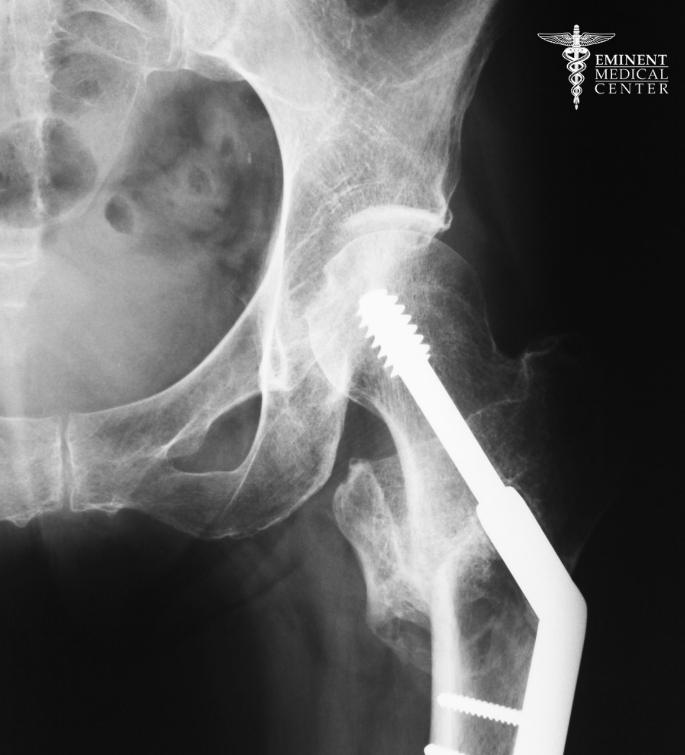
Hip Replacement Options After a Hip Fracture
Surgeons may recommend hip replacement surgery in Richardson when they cannot repair a hip fracture using internal fixation. At Eminent Medical Center, we offer both partial and total hip replacement procedures for patients in Dallas and Richardson, depending on the location and severity of the fracture.
This surgical procedure is often necessary for displaced fractures or damage involving the femoral head or femoral neck, where blood flow may be compromised. Replacing part or all of the hip joint can help prevent avascular necrosis, reduce pain, and restore mobility.
Our orthopedic surgeons will carefully evaluate each patient’s health conditions, age, activity level, and fracture type to determine the best surgical treatment for long-term recovery. To learn more about total and partial hip replacement surgery in Richardson and Dallas, Texas, contact Eminent Medical Center.
Partial vs. Total Hip Replacement
Hip fractures involving the femoral neck or femoral head often require either a partial or total hip replacement. In a partial hip replacement, only the damaged femoral head is removed and replaced with an artificial implant, while the natural socket of the hip joint remains intact. This option is often recommended for older patients who may not need a full range of motion.
A total hip replacement, however, replaces both the femoral head and the socket, making it a better choice for active patients or those with preexisting joint damage. Both procedures aim to reduce pain, prevent blood clots and infection, and allow patients to bear weight and start physical therapy as soon as possible.
Mako Total Hip Replacement Surgery
Eminent Medical Center is proud to offer Mako total hip replacement in Richardson and Dallas for eligible patients with hip fractures. This advanced technology allows our surgeons to create a personalized surgical plan based on a CT scan of the patient’s hip.
Using our DFW Mako total joint replacement system, we can improve the precision of implant placement, protect the surrounding bone and soft tissue, and better preserve the hip joint’s natural alignment.
The Mako total hip replacement is especially beneficial for treating complex femoral neck fractures or for patients with existing wear in the ball-and-socket joint. The goal is to restore mobility, minimize blood loss, and reduce the risk of complications, allowing most patients to begin rehabilitation sooner and stay active longer.
Additional Hip Surgery Procedures Offered in Richardson and Dallas, TX
While hip fracture surgery is a common treatment for broken bones in the upper femur, not all hip conditions involve fractures. At Eminent Medical Center, we offer a full range of hip surgery procedures in Richardson and Dallas for patients experiencing pain, joint instability, or structural issues in the hip joint.
Whether you’re recovering from injury, managing chronic discomfort, or seeking to prevent future complications, our orthopedic surgeons are highly experienced in treating both younger and older patients with personalized care.
Our surgeons treat conditions like labral tears and deformities of the femoral head or acetabulum using advanced surgical options that preserve joint function, restore mobility, and help you stay active with fewer limitations.
Hip Resurfacing
Hip resurfacing is an alternative to total hip replacement for active patients with strong bone quality. Instead of removing the entire femoral head, this procedure involves trimming and capping it with a smooth metal surface and placing a metal cup in the hip socket.
This technique preserves more of the patient’s natural bone and maintains better joint mechanics, particularly in younger patients with larger femoral heads. Hip resurfacing in Richardson may be recommended for those with early-stage arthritis or joint deterioration who want to delay total hip replacement.
Hip Labral Tear Surgery
A hip labral tear involves damage to the ring of cartilage surrounding the socket of the hip joint. This type of injury can cause intense pain, clicking, or instability in the ball-and-socket joint. Hip labral tear surgery in Richardson may involve either repairing or removing the torn cartilage through minimally invasive hip arthroscopy.
Periacetabular Osteotomy (PAO)
Periacetabular osteotomy (PAO) is a surgical procedure used to correct hip dysplasia, a condition where the hip socket does not fully cover the femoral head. By cutting and repositioning the bones around the acetabulum, this surgery improves joint alignment and helps distribute weight more evenly across the hip joint. PAO surgery in Richardson is most often performed on younger patients to prevent early arthritis and delay or avoid the need for hip replacement surgery.
Hip Arthroscopy
Hip arthroscopy is a minimally invasive surgical technique for diagnosing and treating various hip joint problems. The orthopedic surgeon inserts a camera through small incisions and uses specialized instruments to repair damaged cartilage, remove loose bone fragments, or treat soft tissue injuries.
Hip arthroscopy in Richardson can help manage issues like femoral head abnormalities, labral tears, and impingement, especially in active patients. Recovery is generally faster than open hip surgery; most patients can start physical therapy soon after the procedure.
Femoral Osteotomy
Femoral osteotomy in Richardson and Dallas is a corrective surgery that reshapes the upper femur to improve hip joint alignment. Patients with developmental hip disorders, femoral neck deformities, or conditions that place abnormal stress on the joint often benefit from this procedure. By cutting and realigning the thigh bone, this procedure helps restore proper weight distribution and reduce joint wear over time. Femoral osteotomy can delay the need for total hip replacement and improve long-term joint function in both younger and older patients.
Trochanteric Bursectomy
A trochanteric bursectomy can relieve chronic hip pain caused by inflammation of the bursa near the greater trochanter, a bony prominence on the upper part of the femur. This condition, known as trochanteric bursitis, can result from overuse, trauma, or underlying hip conditions.
The surgeon removes the inflamed bursa during surgery and may also address contributing issues, such as bone spurs or tight tendons. Trochanteric bursectomy in Richardson and Dallas can provide lasting relief for patients whose symptoms have not responded to conservative treatment and physical therapy.
What to Expect During Your Hip Fracture Surgery
Hip fracture surgery at Eminent Medical Center stabilizes the broken bone, restores function to the hip joint, and reduces the risk of long-term complications. Once magnetic resonance imaging confirms the location and severity of the fracture, whether it’s a femoral neck fracture, femoral head fracture, intertrochanteric fracture, or subtrochanteric fracture, our orthopedic surgeon will determine the most appropriate surgical treatment.
The surgical procedure may include internal fixation with metal screws or a metal plate, or a partial or total hip replacement if the damage involves the femoral head or disrupts blood flow. Surgery is performed under anesthesia, and our team takes every precaution to manage blood loss, protect the blood supply to the hip, and prevent blood clots and infection. Most hip fractures require prompt surgical care, especially in older patients, to avoid serious health conditions and promote healing.
Recovery After Hip Fracture Surgery
Recovery from hip fracture surgery begins almost immediately after the procedure. We focus on helping most patients bear weight, stay active, and regain mobility safely. Our care team, including physical and occupational therapists, will work with you on a personalized rehabilitation plan to strengthen the muscles around the hip joint and support the fracture site as the bone heals. Early movement is key to avoiding complications such as bed sores, blood clots, and loss of independence.
Physical therapy often begins within a day or two after surgery, and you may use assistive devices like walkers or canes as needed. Older patients may require a longer recovery period, especially if they have additional medical problems, but our goal is always to help you return to your normal routine with reduced pain and improved joint function. Follow-up appointments will allow your surgeon to monitor healing and adjust treatment as needed to support a successful recovery.

Richardson and Dallas Hip Fracture Surgery FAQs
How Soon After a Hip Fracture Do You Need Surgery?
Hip fracture surgery should be performed within 24 to 48 hours after the injury is diagnosed. Prompt surgical treatment helps reduce the risk of complications such as blood clots, avascular necrosis, and prolonged immobility, especially in older patients.
How Long is Hip Fracture Surgery?
Hip fracture surgery typically takes between one and two hours, depending on the type of fracture and the surgical procedure. More complex cases, such as total hip replacement or multiple fracture site repairs, may take slightly longer.
How Long Does it Take to Recover From Hip Fracture Surgery?
Recovery from hip fracture surgery varies, but most patients begin walking with assistance within a few days and continue physical therapy for several weeks. Full recovery can take anywhere from three to six months, depending on the patient’s age, overall health, and the type of surgical treatment performed.
Why Choose Eminent Medical Center for Hip Fracture Surgery in Richardson and Dallas, Texas ?
Eminent Medical Center provides expert hip fracture surgery for patients in Richardson and Dallas, offering advanced care for femoral neck fractures, femoral head fractures, intertrochanteric fractures, and more.
Our orthopedic surgeons use cutting-edge techniques for internal fixation, partial hip replacement, and total hip replacement to preserve the hip joint, protect blood flow, and manage pain. From emergency room coordination to recovery with physical and occupational therapists, we help most patients heal safely and return to mobility with confidence.
To learn more about orthopedic surgical options in Richardson or Dallas, contact Eminent Medical Center.