 DNV GL/NIAHO Accredited facility.
Partial Knee Replacement Surgery in Dallas and Richardson, TX

Minimally Invasive Partial Knee Replacement Surgery in Dallas and Richardson, TX
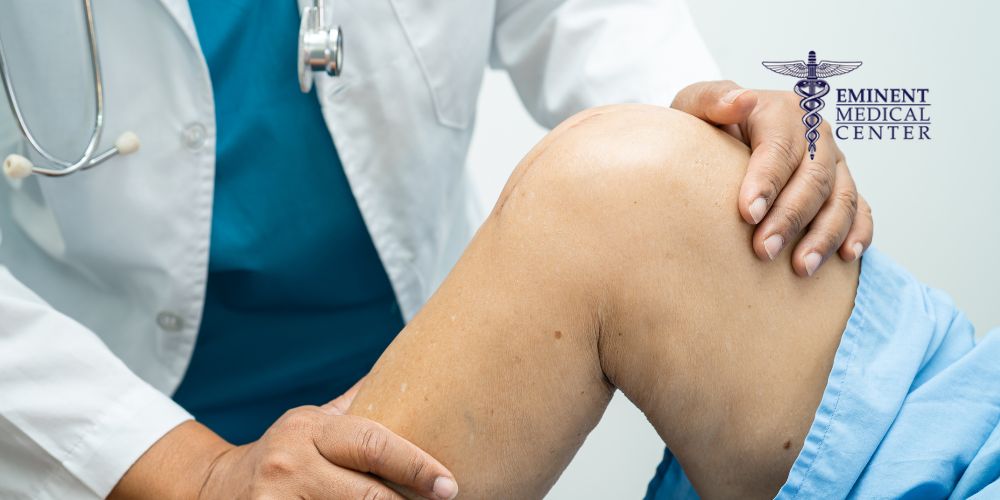
Living with knee pain can make even simple tasks feel overwhelming. A partial knee replacement surgery in Dallas and Richardson, TX can offer the relief you’re looking for. Eminent Medical Center uses a minimally invasive approach that targets only the damaged portion of the knee. This results in less impact on surrounding tissue and a smooth recovery. Orthopedic surgery in Texas does not have to mean months on the sidelines, and our team is here to walk you through every step.
To schedule a consultation, call us at (469) 910-8800 or reach out online through our website.

What Is Partial Knee Replacement Surgery?
Unlike a total knee replacement, a partial knee replacement focuses only on the damaged compartments of the knee joint. The procedure leaves healthy bone, healthy cartilage, and functioning ligaments completely intact. Known medically as unicompartmental knee arthroplasty, this minimally invasive technique removes only damaged tissue. Doctors then replace those sections with a prosthesis.
Patients who qualify usually experience less discomfort and a quicker recovery. If you have been told you need knee replacement in Texas, this approach may offer targeted relief without the added recovery burden.
Who Is a Candidate for Partial Knee Replacement?
Good candidates for this procedure include those whose damage is limited to just one compartment of the knee. Orthopedic surgeons may recommend this surgery to younger patients or individuals who have stable ligaments and a good range of motion. Partial knee arthroplasty can also be beneficial for patients with knee osteoarthritis that has not responded to physical therapy or medication.
A thorough physical examination helps determine whether the surrounding bone and cartilage can support an implant. Your doctor may use magnetic resonance imaging (MRI), CT scans, or other imaging tests to evaluate your knee condition.

Conditions Treated With Partial Knee Joint Replacement Surgery
When damaged tissue breaks down to the point where normal movement becomes difficult, surgery may become necessary. However, not all patients need full knee replacement. Orthopedic surgeons typically perform partial knee replacements when damage is limited to just the lateral, patellofemoral, or medial compartment. If you are looking for a trusted knee surgery center in Richardson, the Eminent Medical Center team is ready to help you relieve pain and get moving again.
Knee Arthritis
Many patients seek knee surgery due to osteoarthritis-related issues. Medial compartment osteoarthritis gradually wears away the cartilage on the inner side of the joint. Arthritis in the lateral compartment impacts the outer knee. In the patellofemoral compartment, arthritis leads to cartilage loss between the patella and the femur. These conditions cause severe pain, swelling, and degeneration, making everyday movement difficult.
A partial replacement is often the most targeted solution for arthritis limited to one part of the knee. When rheumatoid arthritis or inflammatory arthritis affects multiple compartments, the condition is better suited to total knee replacement surgery.
Knee Joint Stiffness and Swelling
Chronic inflammation causes discomfort and gradually limits how much a patient can move and function. Simple activities can be painful when fluid buildup around the bone joint adds pressure. Damage to the patellofemoral compartment can also contribute to stiffness and swelling at the front of the knee.
Stiffness and swelling that persist despite other treatments can impact a patient’s quality of life. In cases where inflammation is limited to one compartment, unicompartmental knee replacement may be part of the surgical plan.
Limited Mobility of the Knee
Something as simple as standing up from a chair or walking to the mailbox should not feel like a major effort. Over time, joint damage tends to progress, turning occasional stiffness into a real loss of daily function. Modern surgical techniques make it possible to treat localized damage without affecting the healthy parts of the joint.
Partial Knee Replacement vs Total Knee Replacement
The biggest difference between these two procedures comes down to how much of the joint is actually replaced. Total knee arthroplasty addresses all three compartments of the knee, while a partial procedure targets only a portion of the damaged knee. The partial route keeps healthy bone and tissue intact and disturbs the surrounding ligaments less. Less pain and a faster return to normal activity are two common reasons patients prefer this approach when they qualify.
Benefits of Partial Knee Replacement Surgery
Choosing a less invasive surgical procedure comes with real advantages that patients notice from the very first stages of recovery. Some of the most recognized benefits include the following:
- Smaller incisions reduce the impact on nearby tissue, which directly lowers postoperative pain.
- Faster recovery times mean most patients spend less time in the hospital and inpatient rehabilitation
- Healthy ligaments and bone are preserved, so the knee often moves more normally after healing.
- Less stress on the body means a lower risk of blood clots and nerve injury.
- Partial knee replacement patients experience reduced pain and improved mobility
The Dallas and Richardson medical team at Eminent Medical Center is here to help you understand whether this path is the right fit for your situation.
The Partial Knee Replacement Procedure
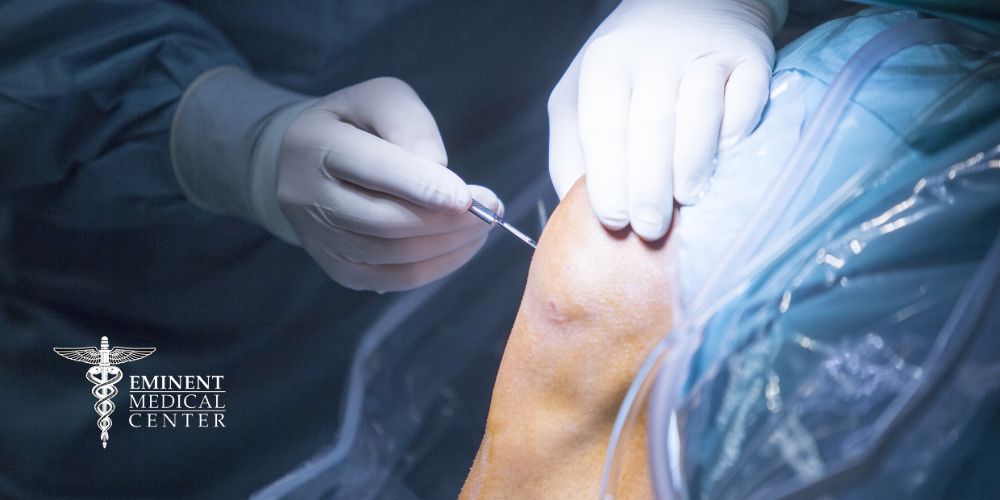
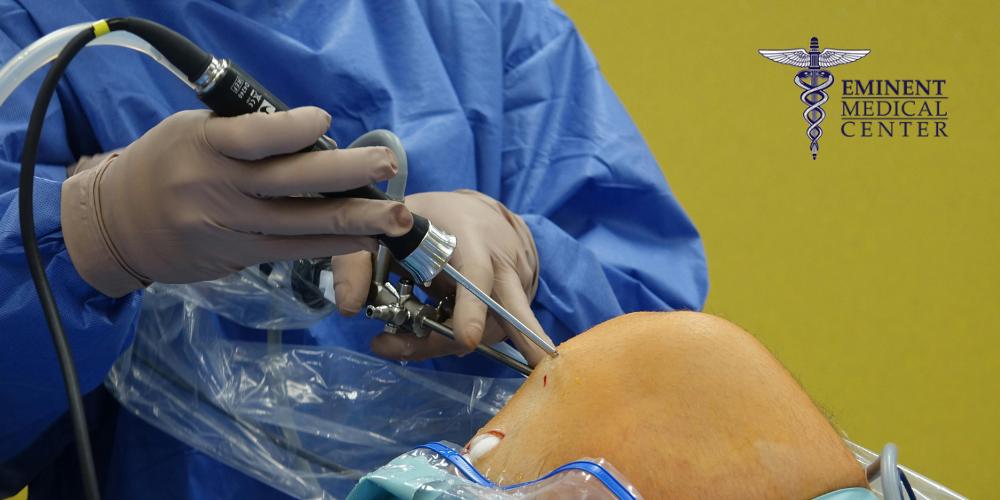
Before surgery begins, patients are given either general anesthesia or regional anesthesia to provide excellent pain relief throughout the procedure. Once the knee is numb and the patient is comfortable, the surgeon makes a small incision to access the affected area. The damaged cartilage and worn bone are carefully removed from the compartment, leaving the healthy portions of the joint untouched. Doctors then position and secure artificial joint components using bone cement. This minimally invasive approach causes less disturbance to surrounding tissue than a traditional knee replacement would.
Advanced Orthopedic Surgery Techniques at Eminent Medical Center
Eminent Medical Center uses modern surgical technology designed to improve accuracy and deliver consistent outcomes. One option we offer is the Mako Robotics partial knee replacement in Richardson, a robotic-assisted technique that elevates precision. From the initial consultation through recovery, our Dallas specialists focus on delivering the best results for each patient.
Recovery After Partial Knee Replacement Surgery
Compared to a total knee replacement, this procedure comes with a significantly shorter healing timeline. Many people return to their routines within three to six weeks, depending on overall health and how well they follow their recovery plan. Full recovery typically takes a few months.
As the knee heals, your doctor will likely issue prescription pain medication to manage discomfort in the short term. Physical therapy begins early in the recovery process, helping patients rebuild strength and restore typical motion. Choosing a less invasive approach also lowers the likelihood of needing revision surgery later.
Partial Knee Replacement FAQs
Patients often have questions about how this procedure compares with a traditional total knee replacement and what to expect in the long term. Our team in Dallas and Richardson, TX, is here to answer your questions and help you feel confident about your care.
How Long Is Physical Therapy Needed After Partial Knee Replacement?
In most cases, you will work with a physical therapist for several weeks to a few months after surgery. Progress depends on individual healing, but the emphasis is always on rebuilding strength, flexibility, and mobility.
How Can You Maintain a Healthy Knee After Partial Knee Replacement Surgery?
Staying active with low-impact exercise and maintaining a healthy weight help protect the knee after partial knee replacement. Be sure to follow through with physical therapy and other medical guidance to improve your chances of recovering strength and function.
Is Partial Knee Resurfacing Surgery The Same as Partial Knee Replacement?
Partial knee resurfacing and unicondylar knee replacement are often used interchangeably. Both involve replacing damaged joint surfaces, though slight differences in technique can exist between the two.
What Pain Management Strategies Support Recovery After Knee Replacement Surgery?
Managing pain after knee replacement usually starts with oral medications and anti-inflammatory treatments. Ice therapy and elevation address swelling in the knee joint. As healing progresses, physical therapy improves comfort and strength.
Patient Testimonials
Eminent Medical Center strives for the highest quality healthcare and is measured by the satisfaction of our patients overall experience.
Get Advanced Knee Care at Eminent Medical Center in Dallas and Richardson, TX. Schedule Your Consultation Today.
At Eminent Medical Center, our Dallas and Richardson orthopedic surgeons take a close look at what is actually going on with your knee before recommending anything. You do not have to keep managing discomfort and hoping it gets better on its own. Whether you’re suffering due to arthritis developing in the knee, an injury, or degenerative wear and tear, we can help. Minimally invasive procedures allow us to provide pain relief while minimizing recovery times.
Contact our team today to learn more about partial knee replacement in Dallas and Richardson, TX. Call (469) 910-8800 or use our online contact form to schedule your consultation.