
 DNV GL/NIAHO Accredited facility.
Foraminotomy Procedure in Dallas and Richardson, TX

State-of-the-Art Medical Center for Foraminotomy in North Texas
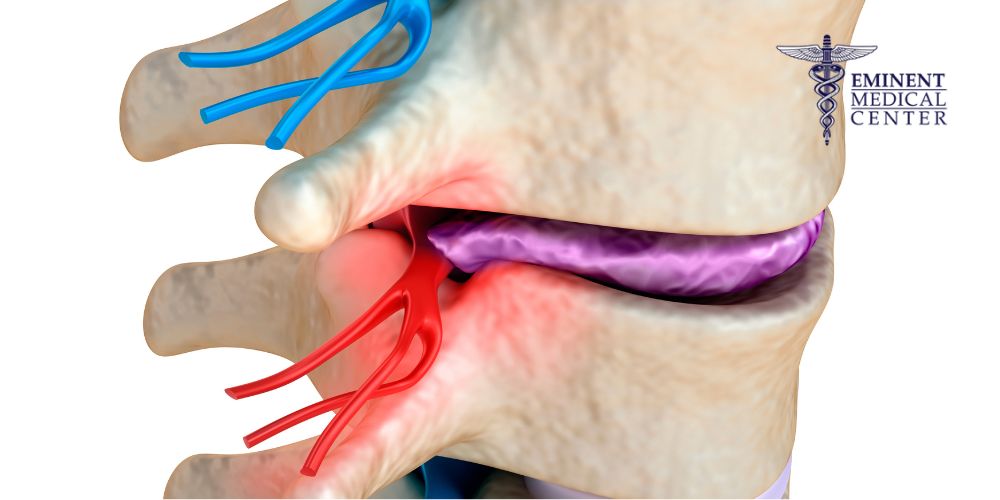
Nerve compression in the spine region is a serious health issue that needs to be addressed quickly. If conservative treatments don’t help, Eminent Medical Center may recommend a foraminotomy procedure in Dallas and Richardson.
Through foraminotomy, Texas spine surgeons expand the neural foramen located between adjacent vertebrae. Prompt surgery can relieve pain and significantly improve the daily lives of patients experiencing nerve pressure. Why choose our team for spine surgery in Dallas and Richardson? Eminent Medical Center is a highly trusted DNV GL/NIAHO accredited facility. We have earned an advanced certification in spine surgery through DNV. Blue Cross Blue Shield of Texas also awarded our facility a Blue Distinction in spinal care. This is a mark of recognition of our ability to deliver specialty care, better patient results, and cost-efficiency.
Don’t wait to discuss your treatment options with a healthcare provider today. Our surgical facility reliably serves patients in Dallas, Richardson, and the surrounding North Texas communities. We’ll help you understand whether surgical treatment is appropriate for your condition. To set up an appointment, call (469) 910-8800 or contact us online.

What Is a Foraminotomy?
Foraminotomy is a surgical procedure performed to relieve pressure on the protective passageways through which nerve roots exit the spine.
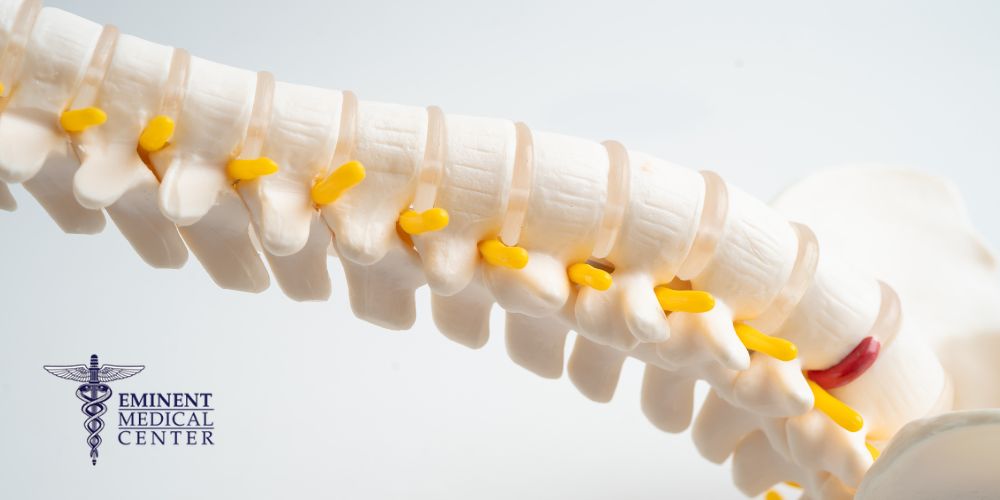
Your spinal column is made of vertebral bones stacked atop one another. It protects the spinal canal, which houses nerve fibers that transmit signals between your body and brain. Spaces called neural foramina form openings where spinal nerves pass into the rest of your body.
When these areas become compressed, the resulting nerve pressure can cause tingling sensations, pain, numbness, or weakness. A foraminotomy procedure is one option for treating this issue.
When Is a Foraminotomy Procedure Recommended?
Texas spinal physicians recommend surgery based on each patient’s unique situation. If non-surgical therapies do not improve the patient’s condition, they may consider foraminotomy. This procedure is useful for addressing persistent nerve pain, muscle weakness, numbness, and reduced mobility. Before deciding the most appropriate treatment, your healthcare provider will review imaging, symptoms, medical history, and prior treatments.
Foraminal Stenosis and Nerve Compression
Foraminal stenosis occurs when spinal openings narrow, causing radiculopathy through pinching nerves. The following conditions can lead to foraminal stenosis:
- Bone spurs
- Disc degeneration
- Herniated intervertebral discs
- Age-related changes, such as thickened ligaments
This condition most often occurs in the lower back and neck region. Through surgery, Dallas spine doctors can remove bone spurs, disc material, or other tissue to make more room for nerves.
Spinal Stenosis and Related Spine Conditions
Narrowing in your spine is dangerous because it puts pressure on your spinal cord and nerves. In addition to the neural foramina, this condition can affect the central spinal canal. Some patients experience narrowing in both areas. Degenerative disc disease, arthritis, and herniated discs can contribute to spinal narrowing.

Any of the following symptoms can indicate that patients need surgery to relieve nerve pressure:
- Radiating neck, shoulder, arm, back, hip, or leg pain
- Numbness or tingling in the extremities
- Muscle weakness
- Difficulty walking or standing
- Symptoms that worsen with certain movements
Richardson spine surgeons are more likely to recommend surgical decompression when symptoms persist despite physical therapy, medication, or injections.
Types of Foraminotomy Procedures in Dallas and Richardson, TX
Eminent Medical Center is a top choice among patients who need spinal decompression. After pinpointing the affected area, our Dallas and Richardson spinal doctors determine which procedure you need.
Lumbar Foraminotomy for Lower Back and Leg Pain
Nerve compression in the lumbar region of the spine often leads to sciatica. Patients with this condition experience pain radiating from the lower back through the buttock and down one leg. In addition to pain, symptoms of nerve pressure in the lower back include leg weakness and numbness. Lumbar foraminotomy treats lumbar foraminal stenosis, degenerative changes, and other lower-back conditions.
Cervical Foraminotomy for Neck and Arm Symptoms
A pinched or compressed nerve in the neck can cause arm, shoulder, and neck pain. Numbness, tingling, and weakness may extend as far down as the hand. Quick action is necessary to treat these issues. For some, a cervical foraminotomy may preserve spinal motion.
Minimally Invasive vs Open Foraminotomy
Foraminotomy may be performed as a conventional open spine surgery or as a minimally invasive procedure. The following table establishes key differences between the two approaches.
Open Foraminotomy | Minimally Invasive Foraminotomy |
Longer incision sites | Smaller incisions |
Requires spine muscles to be cut or stripped | Muscles are parted using tubular retractors or endoscopes |
Surgeon clearly sees the operation site through a wide, direct view | Surgeon uses a high-powered surgical microscope or micro-endoscope to see the operation site |
Patients experience more muscle soreness afterward, and recovery takes longer | Often results in reduced disruption to surrounding tissue, reduced blood loss, and shorter recovery period |
A minimally invasive spine surgery in Dallas and Richardson is not well-suited to every patient or spinal condition. Eminent Medical Center recommends procedures based on each patient’s unique needs.
What Happens During a Foraminotomy Procedure?
Prior to any procedure, our team will complete a thorough diagnosis. Pre-operative testing helps us assess the severity of nerve compression. Through X-ray imaging and other similar tests, we locate where the compression is. We review test results, any medications you’re taking, and your medical history.
Your surgeon may make changes to your medications for a short period before surgery. For example, if you’re on blood thinners, they may change the dosage. Alternatively, they can prescribe other medications to prevent side effects. Drinking alcohol and using tobacco can interfere with healing. For this reason, surgeons sometimes recommend patients limit or stop drinking and smoking before their operation. As part of your surgery preparation, you may need to fast. Our team will provide detailed instructions regarding all of these matters beforehand.
On the day of surgery, ensure that you have reliable transportation to and from the surgery center. As part of discharge, we will offer guidance for postoperative recovery.
Steps of the Foraminotomy Procedure
The process of foraminotomy can differ slightly depending on the location of compression, the type of surgery, and other factors. Generally, however, the following steps occur:
- The patient receives anesthesia.
- The surgeon makes an incision near the affected spinal level.
- They move skin, back/neck muscles, and ligaments to see your spine more clearly.
- To enlarge the neural foramen, the medical team removes bone or disc material.
- The compressed spinal nerve is carefully decompressed.
- Medical professionals move tissues back into place and close the incision site.
- They monitor the patient during recovery.
If you have any questions before or after the operation, don’t hesitate to ask. Our Dallas and Richardson spine surgeons are happy to provide insight.
Is Foraminotomy a Major Surgery?
Yes. Since foraminotomy involves operating on the spine, it is considered a major surgery regardless of the surgical approach. Procedure complexity varies based on the location, number of spinal levels, and surgical technique. For example, open surgery is generally considered more complex than minimally invasive surgery.
Both operations have certain complication risks that you should discuss with your medical team. Our doctors take precautions to minimize the risk of infection, bleeding, nerve damage, and leaking spinal fluids. We ensure all patients are well-informed before the operation begins.
Foraminotomy vs. Laminectomy
Foraminotomy and laminectomy are both spinal decompression surgeries. They differ in the areas the surgeon targets. While foraminotomy enlargens the neural foramen, a laminectomy creates more room within the spinal canal. Texas spine doctors accomplish this by removing the lamina, which is the back arch of a vertebra.
When medical teams perform both procedures together, it is called a laminoforaminotomy. This may be necessary to treat severe nerve and spinal cord compression. To learn more about this procedure and how it may help you, consult with our Richardson laminectomy surgeons.
Benefits of a Foraminotomy Procedure
The goal of foraminotomy is to reduce pressure on spinal nerve structures while preserving spinal stability. This relieves pain in your back and neck, as well as pain radiating into your arms or legs. Some patients experience relief immediately after surgery.
Surgery often improves strength, sensation, and mobility, allowing patients to perform daily activities more easily. Sometimes, foraminotomy helps preserve spinal movement. When doctors use minimally invasive techniques, patients enjoy additional benefits. Smaller incisions are easier to heal, and overall recovery generally doesn’t take as long.
Foraminotomy Recovery Time
The type of procedure, number of levels treated, and your overall health will impact your total recovery time. Walking should begin shortly after surgery. Initial soreness and stiffness are normal, but you may need to restrict certain activities as you recover. Patients may be discharged on the same day after foraminotomy, especially if the doctor used a minimally invasive approach. Your doctor will offer advice for wound care and can prescribe medication to help with any pain.
Localized soreness at the incision site usually subsides within a few weeks. Patients can typically resume normal activities four to eight weeks after surgery. Returning to work is common after four to six weeks. However, be cautious of returning to strenuous activities too soon. Initially, it is best to exercise according to the guidance of a physical therapist.
If you rush recovery or disregard your doctor’s postoperative instructions, you can hurt yourself and undo healing. Be sure to follow your doctor’s advice, ask questions when necessary, and attend all follow-up appointments.
Success Rates and Long-Term Results of Foraminotomy
The outcome of foraminotomy procedures depends heavily on the cause and severity of nerve compression. Many patients experience improvement with pain and other nerve-related symptoms. According to the Cleveland Clinic, foraminotomy has an approximate success rate of 84% to 94%.
Surgery may not eliminate all symptoms, especially if you have had nerve damage for an extended period. Maintaining a healthy spine requires exercise, good posture, safe habits, and regular medical care. Discuss any back issues with your doctor so they can provide effective ongoing care.
Patient Testimonials
Eminent Medical Center strives for the highest quality healthcare and is measured by the satisfaction of our patients overall experience.
EXCELLENTTrustindex verifies that the original source of the review is Google. I just had my second knee replacement surgery within 12 months (Dr. Berry is awesome!) and both were done at Eminent Center. The entire staff is friendly and caring from the time you walk in until the time you leave! Big kudos to the nursing staff. From surgery prep to the operating room to recovery they really have great attitudes. Thanks so much to my floor nurses. They are fantastic!!! Great experience overall!!!Posted on GoogleTrustindex verifies that the original source of the review is Google. I been here 4 times for my procedures. The best and friendliest staffs a patient can ever ask for!! Keep up the good work!! Thank you!Posted on GoogleTrustindex verifies that the original source of the review is Google. The team made sure they communicated with me very well. I knew everything I had to do every inch of detail, the facility was great, and the surgery went great. The instructions and follow up was outstanding.Posted on GoogleTrustindex verifies that the original source of the review is Google. EVERYONE was superb here- from the minute you walk in the door to the minute you leave! Attentive care for my recent surgery- made the process go smoothlyPosted on GoogleTrustindex verifies that the original source of the review is Google. The staff was amazing during my surgery! Friendly, professional, and caring through my entire experience. As an RN myself it was refreshing to have such a great experience with quality staff! Thank you to all the nurses and staff that cared for me! I highly recommend using this facility!Posted on GoogleTrustindex verifies that the original source of the review is Google. The place Is clean with a very friendyatavvyPosted on GoogleTrustindex verifies that the original source of the review is Google. The staff was great. My wait time was minimal. Very nice facility. I would recommend them to anyone needing day surgery such as I did. Thank you Eminent Medical.Posted on GoogleTrustindex verifies that the original source of the review is Google. Absolutely the best to ever do it! So, kind and the sense of urgency and willing to make you feel comfortable was amazing, good job to the team and my family and I are greatly appreciative!!!Posted on GoogleTrustindex verifies that the original source of the review is Google. My care was amazing. The food was descent and the doctors went above and beyond to make sure surgery was successful.Posted on GoogleTrustindex verifies that the original source of the review is Google. The whole experience wasn't stressful at all. The staff was amazing.. from checking in to prepping for the surgery they were friendly and helpful. Also, the building is very nice and they even have a little Bistro right there for those that are waiting. Thank you for making things so easy!
Contact Eminent Medical Center to Schedule a Foraminotomy Consultation Today
Symptoms of foraminal stenosis, spinal stenosis, or nerve compression need prompt evaluation and medical treatment. When you need professional spinal care, choose Eminent Medical Center. Multiple agencies recognize us for the high-quality medical care, including DNV and BCBS of Texas. With a DNV advanced certification and Blue Distinction for spinal healthcare, we are well-prepared to address various spinal conditions.
Our Dallas and Richardson orthopedic surgeons work closely with each patient, personalizing treatment to their needs. We’ll determine whether a lumbar foraminotomy, cervical foraminotomy, or another treatment may be appropriate for you.
The longer you delay seeking care, the greater the risk of permanent nerve damage or spinal instability. Call Eminent Medical Center today at (469) 910-8800 or contact us online for your appointment.