
 DNV GL/NIAHO Accredited facility.
PCL Tear Treatment in Dallas and Richardson, TX

Expert PCL Injury Treatment at Eminent Medical Center in Dallas and Richardson, Texas
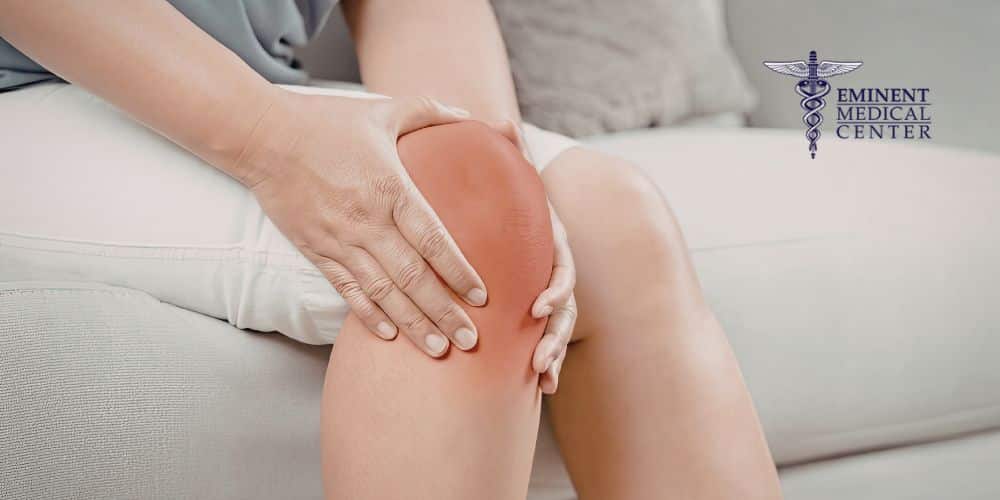
A posterior cruciate ligament injury can result in instability and pain that seriously impact your functionality and quality of life. The Eminent Medical Center medical team provides PCL tear treatment in Dallas and Richardson, TX. We’re dedicated to helping you get back to the life you love.
Located inside the knee joint, the PCL holds the bones in alignment during movement. Getting the right care early protects the knee from long-term damage and preserves knee function. Treatment may include non-operative care or PCL surgery, depending on the severity of the injury. At Eminent Medical Center, every patient receives a personalized plan using advanced orthopedic techniques.
To schedule a consultation, call us at (469) 910-8800 or contact us online today.

What Is a Posterior Cruciate Ligament (PCL) Tear?
Sitting deep inside the knee joint, the posterior cruciate ligament connects the thigh bone to the shinbone and keeps the knee joint stable during movement. According to research shared by the National Library of Medicine, PCL tears happen when a strong force hits the upper, widened portion of the tibia while the knee is bent.
Unlike an anterior cruciate ligament tear, PCL injuries can be harder to identify because the initial symptoms are sometimes less obvious. Without the right treatment, a torn ligament impairs knee function, limits mobility, and puts additional stress on the surrounding joint structures.
Common Causes of PCL Tears
There are several high-impact situations that can lead to a torn PCL, most involving a sudden force applied to a bent knee. One of the leading causes is car crashes, particularly when the knee hits the dashboard. Direct blows to the front of the knee during contact sports like football or soccer have a similar risk. Even landing hard on a bent knee after a fall can cause a PCL tear.
PCL tears tend to come from force that impacts the front of the knee rather than the twisting or cutting movements that can lead to other knee ligament injuries. Knowing the cause of the injury can help guide treatment.
Other Types of Knee Ligament Injuries
The knee relies on multiple ligaments working together. Damage to any one of them disrupts overall joint function. Other ligament injuries can affect the anterior cruciate ligament (ACL), the medial collateral ligament (MCL), and the lateral collateral ligament (LCL). In some cases, avulsion fractures occur alongside ligament damage, making an accurate diagnosis even more important. Diagnostic tests help identify which ligament is involved and the severity of the damage.
Anterior Cruciate Ligament (ACL) Injuries
Unlike a PCL tear, an ACL injury typically occurs during sudden stops, pivoting, or twisting movements rather than from direct forward force to the knee. This is one of the most commonly injured knee ligaments. Damage often causes immediate swelling and instability. Individuals with this injury find it difficult to bear weight. Our orthopaedic surgeons assess injured knees thoroughly to determine the best Dallas ACL tear treatment option.
Medial Collateral Ligament (MCL) Injuries
The medial collateral ligament, which runs along the inner side of the knee, keeps the joint from buckling inward during movement. When an MCL injury occurs, the inner knee becomes unstable and painful, making it difficult to walk or bear weight comfortably. Severe damage to the MCL often happens alongside other knee injuries. For this reason, a careful evaluation is always an important part of building the right treatment plan.
Lateral Collateral Ligament (LCL) Injuries
On the outer side of the knee is the lateral collateral ligament. This provides stability and prevents the joint from shifting outward under pressure. Patients with LCL injuries often feel pain along the outside of the knee. They may also experience swelling and a sense of looseness in the joint. LCL injuries are less common than other knee ligament tears, but still require diagnosis and treatment to restore stability and prevent further damage.
Symptoms of PCL Tears
Swelling and pain around the back of the knee are often the first signs that something is wrong with the PCL. Many patients also notice a sense of instability, as if the knee might give out during movement or when shifting weight. A limited range of motion makes normal activities like walking, climbing stairs, or standing for long periods increasingly difficult. These symptoms can vary in intensity depending on the tear, but they should always be checked by a healthcare provider.

How PCL Injuries Are Diagnosed
Getting an accurate diagnosis involves a physical examination and other tests. Our team considers your medical history while assessing pain, swelling, and joint stability. Specific movement tests can help determine how much the shin bone shifts relative to the thigh bone, indicating the severity of ligament damage. X-rays, MRIs, and other imaging tests provide a clearer picture of the injury and confirm whether it is a partial or complete tear. These tests will also rule out damage to surrounding soft tissues and cartilage injuries.
PCL tears are graded on a scale from Grade I to Grade IV. Grade I involves mild stretching, while Grade II occurs with partial tearing. When the ligament is fully torn, it qualifies as a Grade III injury. Grade IV occurs when damage to another knee ligament accompanies PCL injury.
Non-Operative Treatment for PCL Injuries
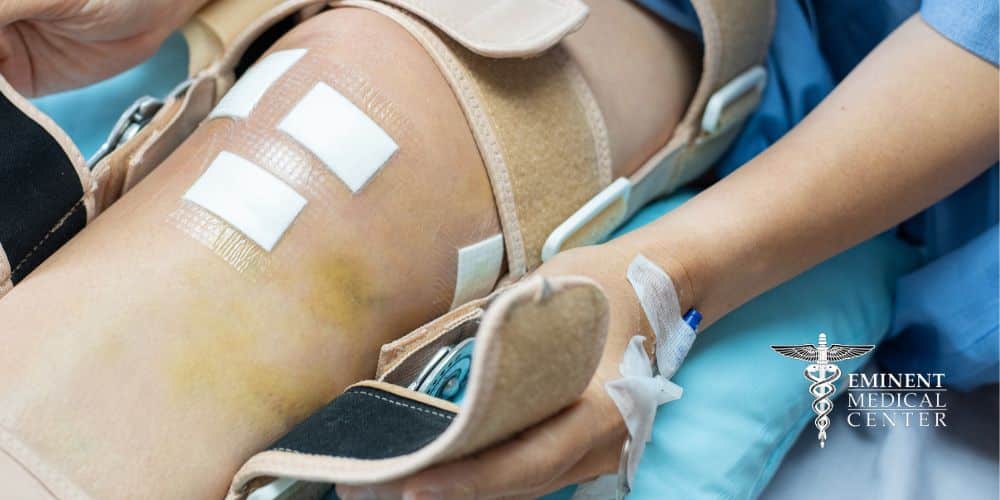
Not every PCL injury requires surgery. For many patients, non-operative treatment produces excellent results. The initial treatment focuses on reducing pain and swelling through rest, a cold compress, and a knee brace to limit harmful movement. During this period, activity modification will protect the joint from further stress while the ligament begins to heal. Working with a physical therapist helps rebuild muscle strength around the knee and restore stability over time.
Non-operative care is most appropriate for Grade I and Grade II tears, as well as patients whose lives involve less activity. Eminent Medical Center’s Richardson, TX pain management specialists provide personalized care based on your unique needs.
When Is PCL Surgery Recommended?
Our Dallas knee surgeons recommend surgery when a PCL is completely torn or when non-surgical treatment hasn’t restored enough stability to the knee joint. Grade III tears rarely heal well without surgical intervention. Combined ligament injuries involving the PCL and the ACL, MCL, or LCL typically require surgery to address all the damage at once. Another strong indicator that surgery is needed is chronic instability that persists despite ongoing care.
PCL Surgery Options
Eminent Medical Center offers advanced options tailored to each patient’s needs. We use state-of-the-art techniques, including Mako Smart Robotics procedures in Texas, to deliver precise, effective results with faster recovery times.
Minimally Invasive Knee Arthroscopy
Arthroscopic surgery is a common approach for treating injuries. Posterior cruciate ligament treatment through this method does not require large incisions. Instead, doctors insert small instruments and a tiny camera through minor entry points. This gives the surgeon a clear view of the damage inside the knee joint. A minimally invasive approach means less disruption to surrounding tissue, reduced post-operative pain, and a faster return to daily activity.
PCL Reconstruction Surgery
When the ligament cannot heal on its own, PCL reconstruction rebuilds it using a tissue graft from the patient or another human donor. The graft is positioned to replicate the original ligament’s natural path, keeping the knee stable during movement. Chronic PCL injuries that have caused lasting instability respond well to this approach, since reconstruction addresses the root of the problem. If other structures in the knee are also damaged, the surgical plan is adjusted to restore full function to the entire joint.
Recovery After PCL Tear Treatment
Recovery times may vary depending on your circumstances, but full post-surgery recovery typically takes six to nine months. In the early stages, an elastic bandage and bracing help control swelling while protecting the healing ligament. Physical therapy begins shortly after and focuses on controlled movements to rebuild the range of motion without placing excessive stress on the knee.
A central part of rehabilitation is strengthening the thigh muscles and core muscles. The upper leg plays a major role in supporting knee stability during daily movement. As strength and confidence return, you can progressively increase activity levels until you reach full recovery. To safely return to sports, you must follow a structured timeline provided by a Richardson sports medicine specialist. This will ensure the knee is truly ready for high-impact movement.
Why Choose Eminent Medical Center for PCL Tear Treatment in Dallas and Richardson, Texas?
Choosing the right team for PCL tear treatment makes a significant difference in how well and how quickly a patient recovers. At Eminent Medical Center, our orthopedic specialists apply advanced diagnostic and surgical techniques to every case. We base your treatment on an evidence-based review of the latest treatment standards. Care here goes beyond treating a single injury. We ensure that every patient receives a personalized treatment plan that accounts for their lifestyle, goals, and overall knee health. No matter if you were injured in a car accident, while playing sports, or due to another incident, we can help.
The American Physical Therapy Association’s best practices shape our rehabilitation approach.. Our team is equipped to support patients through every stage of treatment and recovery.
Patient Testimonials
Eminent Medical Center strives for the highest quality healthcare and is measured by the satisfaction of our patients overall experience.
Schedule a Consultation for PCL Tear Treatment in Dallas and Richardson, TX. Contact Eminent Medical Center Today.
Knee pain and instability are signals worth taking seriously. Waiting too long to seek help can make recovery more difficult down the road. Getting an early evaluation gives our orthopaedic surgeons the information needed to build the right plan before the injury progresses. Eminent Medical Center has the tools, knowledge, and experience necessary to reduce swelling, pain, and instability in the knee.
Every patient deserves a clear diagnosis and a treatment path that fits their life, not just a one-size-fits-all approach. Call us today at (469) 910-8800 or contact us online to schedule your consultation.