 DNV GL/NIAHO Accredited facility.
Shoulder Arthroscopy Dallas and Richardson, Texas


Shoulder arthroscopy is an orthopedic surgery often recommended for individuals experiencing persistent shoulder pain, stiffness, or injuries that haven’t improved with rest or physical therapy.
At Eminent Medical Center, we provide advanced orthopedic surgery in Richardson and Dallas, TX, including arthroscopic shoulder surgery. This type of operation allows our surgical team to make necessary repairs with fewer complications and less pain than traditional, open surgery.
Whether you’re dealing with an injury or ongoing shoulder problems, our experienced orthopedic surgeons can help restore movement and relieve pain. Call (469) 910-8800 or contact us online to schedule a consultation today.
What is Shoulder Arthroscopy?
Shoulder arthroscopy is a type of minimally invasive shoulder surgery that allows orthopaedic surgeons to see inside the shoulder joint and perform treatments. Instead of making a large cut like in traditional surgery, the surgeon makes small incisions and inserts a tiny camera called an arthroscope, along with miniature surgical instruments. This lets the surgical team view the bones, muscles, and tendons in detail to perform necessary shoulder repair.
Most patients prefer arthroscopic surgery because it usually involves less pain, a shorter recovery time, and fewer complications compared to open surgeries. It’s performed as an outpatient procedure, and patients can usually go home the same day.
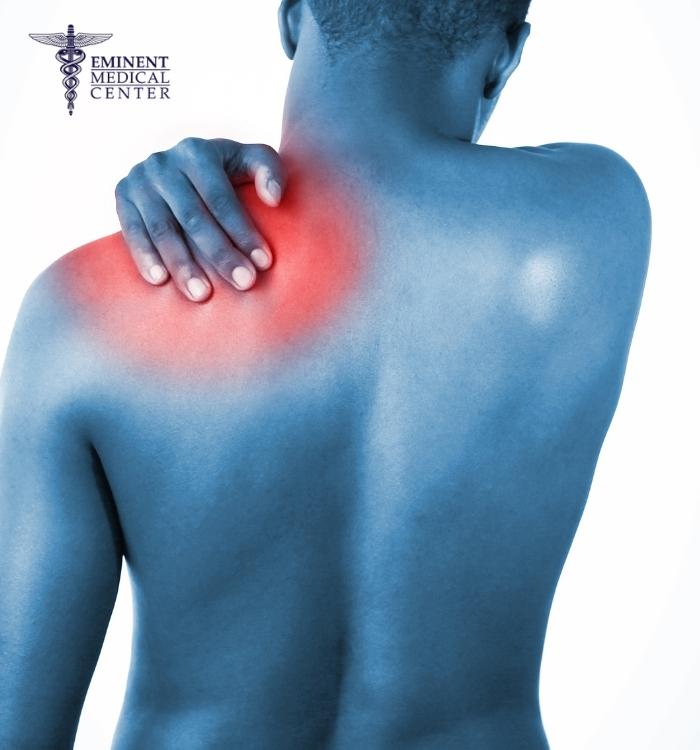
Shoulder Conditions Treated with Arthroscopic Surgery in Dallas and Richardson, TX
Arthroscopic shoulder surgery is used to diagnose and treat several different shoulder conditions that affect the bones and soft tissues in the upper arm and shoulder area.
At Eminent Medical Center, we perform arthroscopic procedures to address shoulder problems when non-surgical treatments, such as physical therapy or pain medication, are no longer effective. Below are some of the conditions we treat with shoulder arthroscopy:
Rotator Cuff Tears
A rotator cuff tear happens when the tendons that help move and stabilize the shoulder become damaged. This type of injury causes significant pain, weakness, and trouble lifting or rotating the arm.
Our orthopedic surgeons typically use shoulder arthroscopy for rotator cuff repair. Through the procedure, the torn rotator cuff tendon is reattached to the upper arm bone using small devices called suture anchors. This helps restore movement and reduce shoulder pain. Many patients choose rotator cuff surgery in Dallas and Richardson, TX, for its minimally invasive approach and effective results.
Labral Tears and SLAP Lesions
The labrum is a ring of cartilage that surrounds the shoulder socket and helps keep the ball-and-socket joint stable. A torn labrum can happen due to injury, overuse, or repeated shoulder dislocations.
Sometimes, a tear occurs at the top of the labrum and extends from the front to the back. This is known as a Superior Labrum Anterior to Posterior (SLAP) lesion. Because a SLAP lesion involves the area of the shoulder where the biceps tendon attaches, it usually results in limited range of motion. Symptoms can also include a painful popping or clicking feeling.
Our team has extensive experience performing SLAP repair surgery in Dallas and Richardson, TX. This arthroscopic shoulder surgery allows for precise labral repair to fix the damaged cartilage ring and restore shoulder stability.
Shoulder Impingement Syndrome
Shoulder impingement syndrome occurs when the outer edge of the shoulder blade pinches the rotator cuff tendon beneath it. This often causes rotator cuff inflammation, swelling, and shoulder pain. With arthroscopic repair surgery, the surgeon can trim inflamed tissue or shave down parts of the shoulder blade that are causing pressure. It’s an effective procedure for treating shoulder impingement syndrome in Dallas and the surrounding areas that helps relieve pain and improve shoulder joint movement with fewer complications than traditional open surgery.
Frozen Shoulder (Adhesive Capsulitis)
Frozen shoulder, also called adhesive capsulitis, is a condition that causes pain, stiffness, and limited movement in the shoulder joint capsule. It happens when connective tissues surrounding the joint become thick and tight, forming scar tissue that restricts motion. This can make everyday movements, like reaching overhead or behind your back, very difficult and painful.
Physical therapy and pain medication can usually help improve mobility and reduce pain. However, there are some cases where arthroscopic shoulder surgery may be necessary. The surgeon uses small instruments to cut through the damaged or inflamed tissue, releasing tension in the shoulder joint and allowing movement again.
After frozen shoulder surgery in Dallas and Richardson, TX, working with a physical therapist is important to rebuild strength and flexibility in the arm and shoulder area.
Shoulder Instability and Dislocations
Shoulder instability usually occurs because of repeated dislocations or the ligaments that hold the shoulder together become stretched, torn, or weakened. As a result, the shoulder may feel loose, slide out of place, or even dislocate during certain movements. This can cause pain, weakness, and a feeling that the shoulder might “give way” at any time.
When shoulder instability doesn’t improve with rest or physical therapy, arthroscopic shoulder surgery may be recommended. During the procedure, the surgeon inserts a tiny camera called an arthroscope into the shoulder joint through small incisions. Using miniature surgical instruments, the surgeon places suture anchors in the ligaments to reattach them to the shoulder socket. This type of shoulder repair helps the shoulder stay stable, reduces the risk of future dislocations, and improves function in the upper extremity.
Bone Spurs and Arthritis in the Shoulder Joint
When arthritis causes cartilage in the shoulder joint to wear down, the bones begin to rub against each other. Over time, the body may respond by forming extra bone, called bone spurs, around the joint. These bony growths can irritate nearby soft tissues like the rotator cuff or biceps tendon, leading to shoulder pain, stiffness, and limited movement.
Arthroscopic repair surgery can remove bone spurs, smooth rough bone surfaces, and clean out damaged, inflamed, or loose tissue in the joint. This helps relieve pressure, improve shoulder function, and reduce chronic pain.
When to Consider Arthroscopic Shoulder Surgery in Dallas and Richardson, TX
You may want to consider arthroscopic shoulder surgery if you have ongoing shoulder pain, stiffness, or weakness that hasn’t improved with physical therapy, pain medicine, or other treatments. This outpatient procedure can help treat a wide variety of shoulder conditions without the brutal recovery process of traditional surgery.
The Arthroscopic Surgery Process at Eminent Medical Center
The details of your outpatient procedure will vary depending on the shoulder condition being treated. However, patients undergoing arthroscopic shoulder surgery at Eminent Medical Center can generally expect the following:
- Anesthesia: Most outpatient procedures use either general anesthesia, which puts the patient completely asleep, or regional anesthesia, which numbs the arm and shoulder area. When regional anesthesia is used, a sedative may be given to help the patient stay calm and comfortable. The anesthesia option will be discussed with each patient before the procedure.
- Surgical Procedure: In the operating room, the surgeon will make small incisions and insert a tiny camera into the shoulder joint. Miniature surgical instruments are then used to remove damaged tissues, repair tendons or ligaments, etc.
- Monitoring: During this orthopaedic surgery, the surgical team will closely monitor the patient’s vital signs, such as heart rate, blood pressure, and breathing, to help prevent complications.
Shoulder Arthroscopy Recovery Time and Rehabilitation
Although arthroscopic surgery patients typically go home the same day, it’s important to understand that healing takes time.
In the first week after surgery, it’s normal to experience pain, swelling, and limited shoulder movement. Pain medicine may be prescribed to help you stay comfortable, and you should get plenty of rest. After a couple of weeks, the pain should start to ease, and your doctor or physical therapist may recommend starting gentle exercises to help restore movement.
A full recovery usually takes several months, depending on the extent of the surgery and your body’s natural healing process. Everyone heals differently, so it’s essential to listen to your body, go at your own pace, and avoid pushing yourself to do things too soon.
Risks and Complications of Arthroscopic Shoulder Surgery
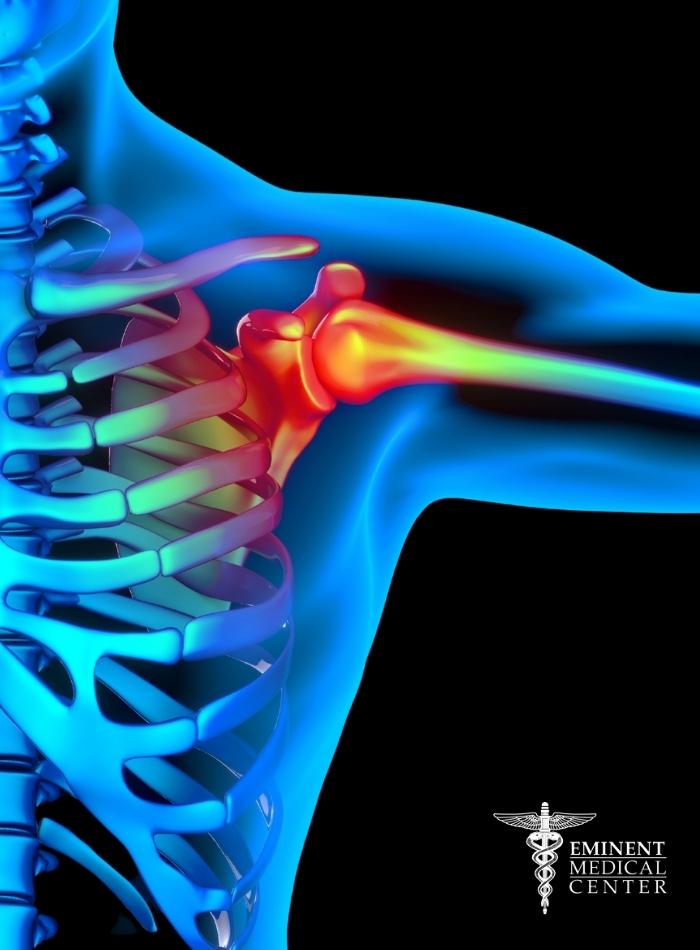
Like any surgical procedure, arthroscopic shoulder surgery carries some potential risks. These are generally rare, but it’s important to be aware of them and discuss any concerns with your orthopaedic surgeon before surgery. Possible risks and complications may include:
- Allergic reaction to anesthesia medicines
- Breathing problems
- Bleeding
- Shoulder stiffness
- Failure to relieve symptoms
- Weakness in the shoulder
- Blood vessel or nerve injury
- Damage to cartilage in the shoulder
Almost 99% of patients recover without serious problems; however, it’s still necessary to recognize these risks so that you can take the proper steps during recovery and contact your care team if anything feels off.
Additional Arthroscopic Shoulder Surgeries Performed at Eminent Medical Center
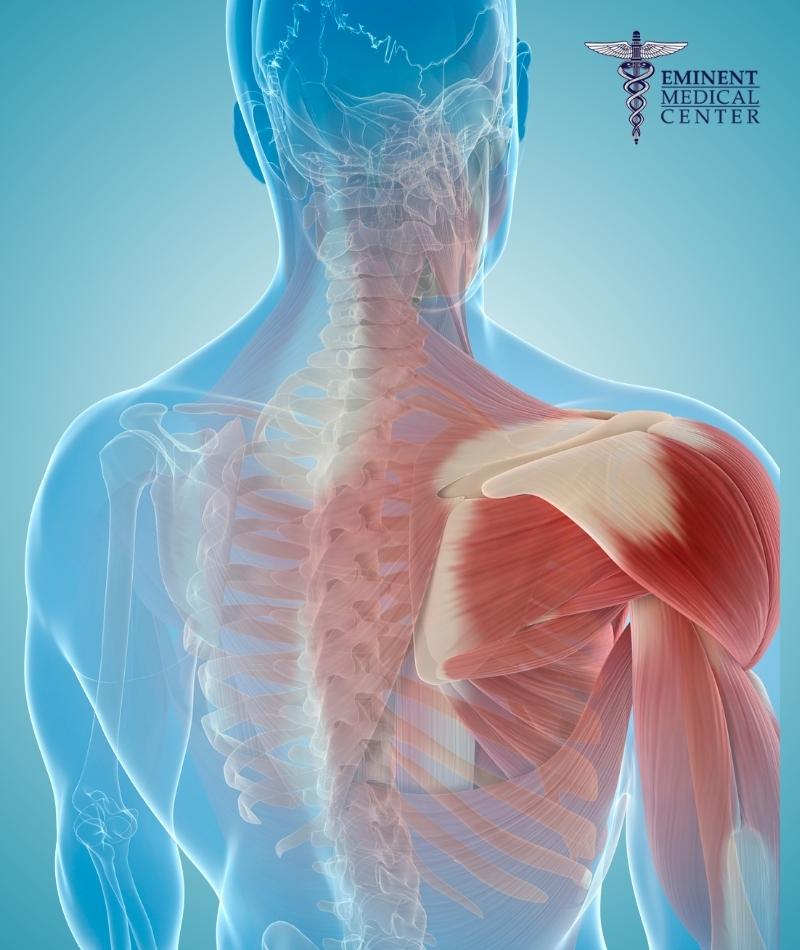
In addition to treating common issues like shoulder impingement and rotator cuff tears, Eminent Medical Center offers a wide range of advanced arthroscopic shoulder procedures. As a trusted Dallas and Richardson, TX shoulder surgery center, we use minimally invasive techniques to address many different shoulder conditions. Our goal is to relieve pain, improve shoulder function, and help patients return to everyday activities as comfortably as possible.
AC Joint Surgery
The acromioclavicular (AC) joint, where the collarbone meets the shoulder blade, can become painful due to arthritis, injury, or overuse. AC joint surgery in Dallas and Richardson, TX, is performed arthroscopically to reconstruct or repair the joint to relieve pain and restore movement.
Bankart Repair
A Bankart tear happens when the labrum in the shoulder socket is torn, often due to repeated dislocations. Our Richardson and Dallas Bankart repair surgery at Eminent Medical Center is a common arthroscopic procedure used to reattach the torn labrum and tighten the shoulder joint capsule. This helps the shoulder stay stable and lowers the risk of future dislocations.
Arthroscopic Debridement
Arthroscopic debridement removes loose tissue, frayed cartilage, or damaged tissues that may be causing pain or limiting motion in the shoulder joint. The procedure is usually performed when there are multiple small sources of discomfort in the shoulder, rather than a single large injury.
Bicep Tendon Surgery
When the biceps tendon becomes torn or irritated, it can lead to pain in the upper arm and shoulder area. Bicep tendon surgery can be performed arthroscopically to repair or reattach the damaged biceps tendon. This helps alleviate pain and improve shoulder strength.
Why Choose Eminent Medical Center for Arthroscopic Shoulder Surgery in Dallas and Richardson, TX?
Whether you’re dealing with chronic shoulder pain or recovering from a recent injury, the medical professionals at Eminent Medical Center are here to help. Our skilled team of orthopaedic surgeons and state-of-the-art facilities make us a trusted choice for arthroscopic shoulder surgery in Dallas and Richardson, TX. We’re committed to helping you regain comfort, strength, and mobility with personalized care and the latest surgical techniques.
Don’t let shoulder pain limit your daily life. Take the next step toward recovery by scheduling your shoulder surgery at Eminent Medical Center. Call (469) 910-8800 or fill out our online intake form today.