 DNV GL/NIAHO Accredited facility.
Dallas and Richardson SLAP/Labrum Repair Surgery
Advanced Shoulder Treatment at Eminent Medical Center
Shoulder pain can interfere with the simplest parts of your day, such as getting dressed, reaching overhead, or sleeping comfortably. At Eminent Medical Center, we provide Dallas and Richardson SLAP/Labrum Repair Surgery to help patients regain strength and mobility in the shoulder joint. Our orthopedic team uses advanced arthroscopic techniques to repair torn labrums, restore stability, and reduce pain.
Eminent Medical Center offers orthopedic care to patients in Richardson, Dallas, and the surrounding Texas areas. We focus on patient comfort, clear communication, and minimally invasive surgical solutions designed for quicker recovery and long-term shoulder health. Every treatment plan is personalized, precise, and built around your individual needs and lifestyle.
Call (469) 910-8800 or contact us online to schedule your consultation with our orthopedic team at our Dallas and Richardson shoulder surgery center. We’re here to answer your questions, review your symptoms, and recommend the most effective treatment plan to help you regain comfort and function in your shoulder.
Understanding Labral Tears and Shoulder Instability
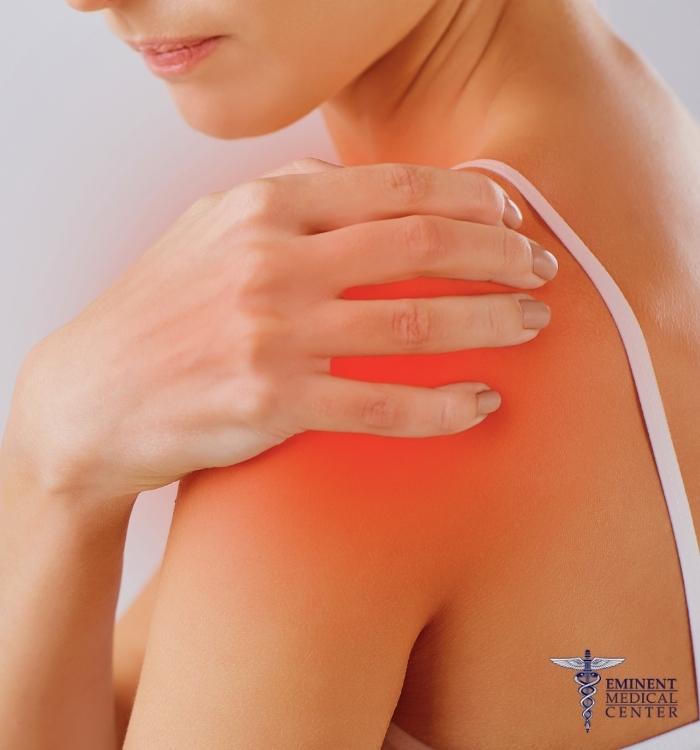
The shoulder is a ball-and-socket joint made up of the upper arm bone (humerus) and the shoulder socket. A ring of cartilage called the labrum lines the socket and helps stabilize the joint by keeping the humeral head securely in place during movement. Damage to this cartilage is known as a labral tear. It can lead to shoulder instability, aching pain, reduced range of motion, and limited strength during overhead activity.
Labral tears can occur in athletes who throw, lift, or swim, as well as in individuals with repetitive shoulder strain, poor mechanics, or previous shoulder dislocations. A torn labrum can also result from a fall or direct impact. When the labrum is damaged, the joint can become loose, making the shoulder feel unstable, especially during normal shoulder movements.
SLAP Tears
SLAP stands for Superior Labrum Anterior to Posterior. A SLAP tear occurs at the attachment site where the biceps tendon anchors to the superior labrum. This injury is common in younger patients involved in sports or who use repetitive overhead motions. It may also involve torn ligaments that compromise shoulder stability.
Bankart Tears
Bankart tears typically result from anterior shoulder dislocations and lead to anterior instability. These tears affect the lower portion of the labrum and are most common in younger, active patients who face recurrent dislocations. In rare cases, patients may show posterior instability, which requires imaging or specific physical testing for diagnosis.
Signs and Symptoms of a Shoulder Labral Tear
Labral tears can cause various symptoms that affect daily activities and athletic performance. Some of the most common signs include:
- Clicking, popping, or grinding sensations
- Weakness in the shoulder or upper arm, especially during overhead movements
- Aching pain deep in the shoulder socket
- Feel apprehension or instability when lifting or rotating the arm
If you experience pain that interferes with your routine or creates a limited range of motion, it may be time to seek a physical exam.
Diagnosing Shoulder Labral Injuries

Our diagnostic process begins with a physical exam to evaluate your range of motion, shoulder stability, strength, and pain response. During this evaluation, your surgeon may perform specific clinical tests, such as the O’Brien’s test or the Crank test, which place the shoulder in different positions to check for signs of a labral tear or shoulder instability. These movements help reproduce symptoms and provide insight into how the shoulder functions under stress.
In addition to the physical exam, advanced diagnostic imaging plays a key role. An MRI is commonly used to detect soft tissue damage and can show signs of inflammation or detachment near the labrum. A CT arthrogram may also be ordered, especially if detailed images of the shoulder joint are needed. This scan involves injecting contrast dye into the joint to provide a more accurate view of tears or irregularities in the labrum.
Both imaging methods help determine the exact location and severity of the tear and guide treatment decisions. These tools also help confirm the need for arthroscopic repair, especially when noninvasive findings are unclear or when surgical treatment is being considered.
What is Shoulder Labral Repair Surgery?
Labrum repair surgery is a surgical treatment that reattaches the torn labrum to the shoulder socket. Suture anchors are placed to hold the labrum in position while it heals. Repair surgery aims to restore shoulder stability, relieve pain, and return the joint to normal shoulder movements.
Patients with SLAP tears, Bankart tears, or recurrent shoulder dislocations may benefit from labral repair surgery. This approach is especially effective in younger patients or individuals who wish to return to high-level activity. Older patients can also benefit from surgery, particularly when shoulder function and pain relief are the primary goals.
Arthroscopic Techniques for Shoulder Labral Repair in Dallas, TX
At Eminent Medical Center, we perform arthroscopic repair using small incisions and specialized surgical instruments. A tiny camera inserted into the joint allows the surgeon to view and repair the damaged cartilage without fully opening the shoulder.
Arthroscopic repair reduces soft tissue trauma and helps facilitate healing by preserving surrounding structures. This technique also helps minimize scar tissue, improves cosmetic results, and reduces the need for pain medication. This approach is commonly recommended for SLAP tears, Bankart tears, and other labral injuries that require precise repair with minimal disruption to surrounding tissue.

Advantages of Arthroscopic Labral Repair Surgery
Labral arthroscopic surgery is a less invasive option that helps patients heal faster with fewer complications. Advantages include:
- Smaller incisions with less visible scarring
- Quicker recovery time and quicker return to daily activities
- Decreased postoperative pain
- Less damage to the surrounding tissue
- Precise placement of suture anchors using real-time visualization
- Early start to physical therapy and strengthening exercises
These benefits make recovering, rebuilding strength, and returning to regular activity easier.
Shoulder Labral Tear FAQS
How Long Does Shoulder Labrum Repair Surgery Recovery Usually Take?
Full recovery typically takes 6 months to a year. Most patients begin passive movement exercises within the first few weeks, progressing to active range and strengthening under the care of a physical therapist.
Will I Need Physical Therapy After Labral Repair Surgery?
Yes. Physical therapy is essential in the rehabilitation process and typically begins within the first 6 weeks after surgery. A licensed physical therapist will guide you through a range of motion and strengthening exercises to restore shoulder stability and prevent reinjury.
How Soon Can I Return to Sports or Exercise After Labrum Repair Surgery?
Return to sports depends on the severity of the tear, overall health, and progress during therapy. If shoulder strength and flexibility are fully restored, most patients resume sports within 5 to 6 months.
Why Choose Eminent Medical Center for SLAP/Labrum Repair Surgery in Dallas and Richardson, TX
Our Texas orthopedic surgeons at Eminent Medical Center use advanced arthroscopic techniques to perform labral repair surgery with precision. If you have a SLAP tear, Bankart tear, torn ligaments, or ongoing symptoms related to a previous shoulder dislocation, our team will create a personalized treatment plan focused on long-term recovery.
We understand the crucial role that shoulder stability plays in your ability to work, move comfortably, and stay active. Our goal is to help you regain your pre-injury level of function using the safest and most effective approach. All procedures are performed in our state-of-the-art surgical suites, designed to support advanced orthopedic care in a safe, modern environment.
Patients across Dallas and Richardson turn to us for effective surgical procedures, guided rehabilitation, and attentive care. We evaluate each case, explain your options clearly, and support your recovery at every step. Call (469) 910-8800 or contact us online to schedule your consultation and take the next step toward lasting shoulder relief.