 DNV GL/NIAHO Accredited facility.
Arthrodesis in Richardson and Dallas
Arthrodesis in Richardson and Dallas is a proven surgical solution offered at Eminent Medical Center, designed to provide long-term relief for patients with severe arthritis, osteoarthritis, or spine issues. Our experienced surgeons focus on delivering a successful joint fusion with techniques that include minimally invasive options for lower risk and recoveries, often within just a few weeks. By addressing the patient’s pain and restoring stability, arthrodesis offers significant improvement in mobility and quality of life. For trusted care, we are your destination for joint fusion in Richardson and Dallas.
Call Eminent Medical Center at 469-910-8800 or contact us online to schedule an appointment with a leading orthopedic surgeon in Dallas and Richardson, TX.
What is Arthrodesis?
Arthrodesis is a surgical procedure used to fuse two bones together in order to eliminate movement in a damaged joint, providing stability and significant pain relief. This surgery is commonly performed when conditions like severe arthritis, osteoarthritis, or rheumatoid arthritis have caused joint instability or the loss of joint cartilage. It is often considered a last resort after conservative treatments have failed to relieve the patient’s pain.
Arthrodesis surgery is used to treat both small and large joints. The goal is to achieve a successful joint fusion, where two adjoining bones are permanently joined. While the surgery treats chronic joint issues, it does come with risks. However, most patients experience significant improvement following recovery.
Double Arthrodesis
Double arthrodesis is a surgical procedure that involves the fusion of two bones or joints, typically in the foot or ankle. It is commonly performed to treat severe arthritis, deformities, or instability in the joints, such as the talonavicular and calcaneocuboid joints in the foot.
To learn more about double arthrodesis in the DFW area, contact Eminent Medical Center.
Triple Arthrodesis
Triple arthrodesis is a surgical procedure that involves fusing three joints in the foot: the talonavicular, calcaneocuboid, and subtalar joints. The triple arthrodesis surgery is commonly used to treat severe foot deformities, severe arthritis, or instability that affects these joints.
To learn more about triple arthrodesis in the DFW area, contact Eminent Medical Center.
Common Conditions Treated by Joint Fusion Surgery in the DFW Area
Joint fusion in Richardson and Dallas is commonly used to treat conditions that cause pain, instability, or deformity in the joints. These include:
Arthritis
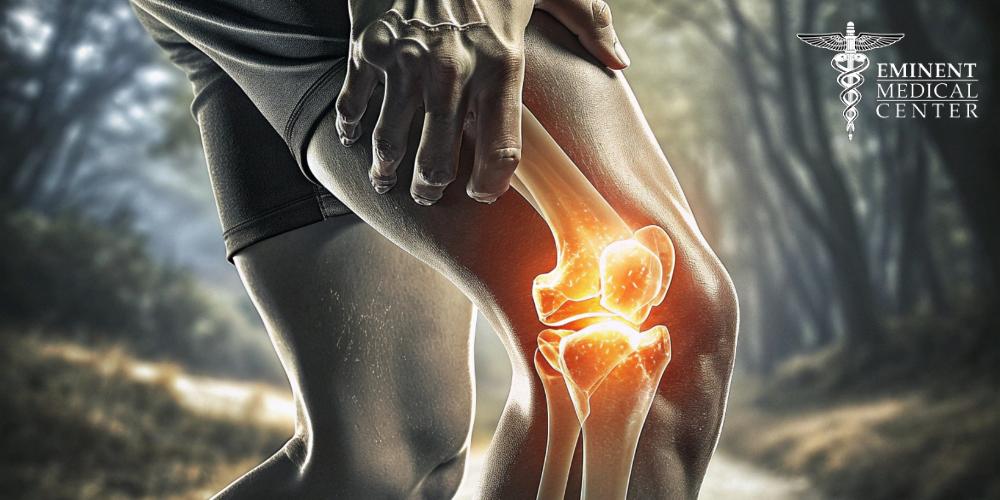
Arthrodesis surgery is a highly effective treatment for arthritis, particularly in cases of severe arthritis caused by conditions like osteoarthritis and rheumatoid arthritis. It helps alleviate pain and improve stability for patients with severe arthritis, which is the most common reason for the procedure.
Fractures
Arthrodesis surgery helps stabilize fractures by permanently linking the affected bones. It is especially beneficial for complex fractures that require additional support. Contact Eminent Medical Center to learn more about fracture repair in Richardson and Dallas.
Spinal Conditions
Arthrodesis surgery addresses spinal conditions like scoliosis and kyphosis by correcting alignment and stabilizing the spinal cord. It also treats instability and supports recovery in cases of herniated discs by preventing excessive movement and ensuring long-term stability.
Joint Infections
Arthrodesis surgery treats joint infections by stabilizing the joint after damage. It provides long-term relief and improves joint function when infections make other treatments ineffective.
Failed Joint Replacement Surgery
Arthrodesis surgery helps in cases of failed joint replacement surgery. It is a reliable option when replacement implants fail or cause pain. To learn more about revision joint replacement in Richardson and Dallas, contact Eminent Medical Center today.
Types of Arthrodesis Performed at Our Richardson and Dallas Surgical Facility
Spinal Fusion
Common types of spinal arthrodesis in Richardson and Dallas include:
SI Joint Fusion
The most common reason for spine arthrodesis is SI joint fusion. SI joint fusion is a surgical procedure designed to treat pain caused by conditions affecting the sacroiliac joints. During the procedure, the surgeon fuses the sacroiliac joints with plates, screws, and grafts, which connect the sacrum at the base of the spine to the iliac bones. This spine surgery eliminates movement in the sacroiliac joints and helps to alleviate pain that has not responded to other treatments like physical therapy. For those seeking SI joint fusion in Dallas and Richardson, this procedure is an effective option to restore stability and reduce discomfort caused by sacroiliac joint dysfunction.
Other types of spine arthrodesis in the DFW area include:
- Cervical fusion involves the vertebrae in the cervical spine and is typically used for degenerative disc disease, herniated discs, spinal fractures, or instability.
- Lumbar fusion is performed in the lumbar spine and is often used for degenerative disc disease, spondylolisthesis, or spine instability.
- Thoracic fusion involves fusing the vertebrae in the thoracic spine. It may be performed for spinal tumors, fractures, or scoliosis.
- Anterior lumbar interbody fusion (ALIF) is performed through the front of the body and is typically used for degenerative disc disease or disc herniation.
- Posterior lumbar interbody fusion (PLIF) is performed through the back and involves removing a damaged disc and inserting a bone graft to stabilize the spine.
- Transforaminal lumbar interbody fusion (TLIF) is similar to PLIF, but performed through a slightly different approach.
- Minimally invasive spinal fusion uses smaller incisions and specialized tools to reduce tissue damage and shorten recovery times compared to open surgery.
Hip Fusion
Hip arthrodesis fuses the bones in the hip joint to relieve chronic pain and improve stability, often when other treatments have failed. While effective, it carries risks such as stiffness and complications at the fusion site. Patients considering hip fusion in Richardson and Dallas should consult with their healthcare provider to determine if it’s the best treatment option for their condition.
Knee Fusion
The knee arthrodesis procedure involves fusing the knee joint to eliminate motion and provide long-term pain relief, offering a stable solution for patients suffering from severe arthritis or traumatic injuries. During the procedure, screws and plates are used to secure the two bones together. For those considering knee fusion in Richardson and Dallas, consult with a healthcare provider to determine if this procedure is the best option for your pain or symptoms.
Ankle Fusion
Ankle arthrodesis is a surgical procedure used to treat chronic pain and instability in the ankle. During the procedure, bone grafts, screws, and plates are used to fuse the joint. For patients in need of relief from severe symptoms, ankle fusion in Richardson or Dallas is an effective surgical option. Consult with a healthcare provider to determine if ankle arthrodesis is the right choice for you.
Wrist Fusion
Wrist arthrodesis is a procedure used to treat chronic pain and instability in the wrist. During the procedure, screws and plates are used to join the bones together. For patients in need of wrist arthrodesis in Dallas or Richardson, it’s important to consult with a healthcare provider to determine if this procedure is right for relieving symptoms and restoring function.
Shoulder Fusion
Shoulder arthrodesis, or arthrodesis surgery, is used to fuse the shoulder joint for patients with severe pain or instability. During the procedure, screws are used to secure the joint. For patients considering shoulder arthrodesis in Richardson and Dallas, consulting a healthcare provider is essential to determine if this surgery is the best option.
Minimally Invasive Joint Fusion in the DFW Area
Minimally invasive joint fusion surgery in Richardson and Dallas is a surgery commonly performed to treat a damaged joint while reducing the risk and recovery time associated with open surgery. A surgeon uses advanced techniques to access the body with smaller incisions, minimizing complications and promoting faster recovery. This approach is ideal for patients seeking a less invasive option for joint fusion in the DFW area.
- Minimally invasive spinal fusion is a type of spinal arthrodesis where a surgeon uses small incisions to access the spine, reducing the patient’s risk. This surgery is used to stabilize the sacroiliac joints or other areas of the body affected by instability. It offers a less invasive solution for patients needing spine stabilization.
- Minimally invasive foot or ankle fusion is a procedure designed to stabilize the foot and ankle while reducing patient risk. A skilled surgeon uses smaller incisions to access the body, promoting faster recovery and less discomfort. This approach is ideal for patients seeking effective treatment for joint damage in the foot and ankle region.
- Minimally invasive wrist or hand fusion is a procedure where a surgeon stabilizes the body’s hand or wrist joints while minimizing the patient’s risk. This approach uses smaller incisions to treat joints effectively, ensuring quicker recovery for patients.
Other Surgeries Used in Combination With or Instead of Arthrodesis in Dallas and Richardson, TX
Other surgeries are often performed in combination with arthrodesis to address underlying conditions or enhance outcomes. Osteotomy or ligament repair may be included when deformities or instability accompany arthritis, which is the most common reason for arthrodesis in the DFW area.
Osteotomy
Osteotomy and arthrodesis are often complementary procedures, with osteotomy used to realign bones before arthrodesis stabilizes the joint.
To learn more about spinal, knee, ankle, femoral, elbow, or periacetabular osteotomy in Richardson and Dallas, contact Eminent Medical Center.
Laminectomy
While a laminectomy removes part of the vertebra to relieve pressure on the spinal cord or nerves, arthrodesis stabilizes the spine by fusing the affected vertebrae, ensuring long-term support and alignment.
Contact Eminent Medical Center to learn more about a laminectomy in Dallas or Richardson.
Discectomy
While discectomy removes a damaged or herniated disc to relieve nerve pressure, arthrodesis stabilizes the spine by fusing the affected vertebrae.
To learn more about discectomy in Dallas or Richardson, contact Eminent Medical Center.
Mako Joint Replacement
Mako joint replacement in Richardson and Dallas offers an advanced alternative to arthrodesis by using robotic-assisted technology to replace damaged joints while preserving motion. This cutting-edge procedure provides precise alignment and improved outcomes, making it an excellent option for patients seeking to maintain joint mobility compared to arthrodesis.
The Arthrodesis Procedure in Richardson and Dallas
Before the arthrodesis procedure, a thorough evaluation is performed by your healthcare provider to assess the condition of the joint involved, including whether joint cartilage has been significantly damaged due to conditions like severe arthritis, osteoarthritis, or rheumatoid arthritis.
The joint fusion procedure is often considered the best treatment option when more conservative treatments fail, especially in cases of end-stage arthritis or fractures that cannot heal properly.
So, how is arthrodesis performed?
There are several ways joint fusion surgery is performed. Depending on the joint involved, such as the ankle, hip, foot, or spine, arthrodesis may be performed as a joint fusion surgery using screws, plates, or external fixation to stabilize the two bones and promote bony fusion.
During the arthrodesis procedure, the surgeon removes the damaged joint. From here, the surgeon prepares the two bones by ensuring proper alignment at the fusion site. The surgeon then fuses the two bones using grafts or synthetic materials to aid in the healing process. This joint fusion procedure is designed to eliminate pain by reducing motion at the affected joint.
Most patients experience significant improvement in symptoms, such as pain relief and increased stability, though recovery time can vary, typically requiring several weeks to months for the two bones to fuse correctly.
Additional procedures may be required depending on the condition of the joint and the success of the initial arthrodesis procedure. The goal is to fuse correctly and provide long-term stability, though there is always a risk of complications, including infection or failure. Following surgery, your surgeon will recommend physical therapy to help restore strength and mobility around the fused joint.
Joint Fusion Recovery Time
Recovery after arthrodesis varies depending on the joint involved, especially when large joints like the hip or knee are fused. Many patients can expect a recovery time of a few weeks to several months for a joint fusion.
Patients must limit motion to ensure that the two adjoining bones fuse correctly. Physical therapy plays a key role in ensuring the two bones and fusion sites are healed. Patients typically experience immense pain relief and some stiffness after the arthrodesis procedure.
For the best chance of a successful joint fusion, it is important to follow the recovery plan closely, as complications like infection or failure can extend recovery time. Many patients experience significant improvement in function once the healing process is complete.
If you’re ready to experience pain relief through this orthopedic surgery, contact our facility to learn about options for joint fusion surgery in Richardson and Dallas, Texas.
Potential Complications of Joint Fusion Surgery
While arthrodesis is generally safe, there are potential complications to consider. This can include infection at the fusion site, failure to achieve joint fusion successfully, or improper healing of the two adjoining bones. In cases involving large joints, such as the hip or knee, the risk of complications may be higher due to the increased stress placed on the fused joint. Stiffness can also develop where the two bones meet, and if the fused joint does not progress correctly, it may lead to persistent pain.
In some instances, external fixation or additional procedures may be required to support the healing process. However, with careful management, most patients achieve a successful joint fusion and experience significant improvement in their pain and other symptoms.
Why Patients Choose Eminent Medical Center for Joint Fusion in Richardson and Dallas, Texas
Patients choose Eminent Medical Center for its advanced surgical care and focus on delivering personalized solutions for total joint surgery in Dallas and Richardson. As a leading DWF surgical facility offering minimally invasive techniques and expert recovery plans, we ensure the best treatment option for you, with many procedures allowing recovery within several weeks.